For professional window cleaners, a damaged clamp, worn brush, leaking connector, or unavailable pole section can take useful equipment out of service. For distributors and importers, stocking the right water fed pole spare parts can improve customer support, protect product reputation, and create repeat sales without requiring a large inventory of complete systems.
The challenge is deciding which parts to stock, how to confirm compatibility, and how to avoid tying up cash in components that do not fit the products customers own. This guide from Cleafou provides a practical framework for building a supportable spare-parts program for water fed poles and pure-water equipment.
Why Spare-Part Planning Matters in B2B
Commercial users evaluate equipment over its service life, not only on the day of purchase. When a replaceable component fails, the customer wants to know whether it can be identified, sourced, and installed quickly.
A clear spare-parts program can help distributors:
- Reduce downtime for professional customers
- Avoid replacing an entire pole when one section or clamp is damaged
- Support repeat purchases of brushes, filters, and other consumables
- Reduce confusion about fit and compatibility
- Improve the value of wholesale and private-label product lines
- Plan warranty and service inventory more accurately
Parts availability depends on the product design and supplier support. Before promising that a component is replaceable, confirm the part, its fit, and the ordering process with the manufacturer.
Map the Complete Product System
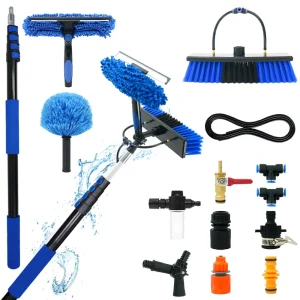
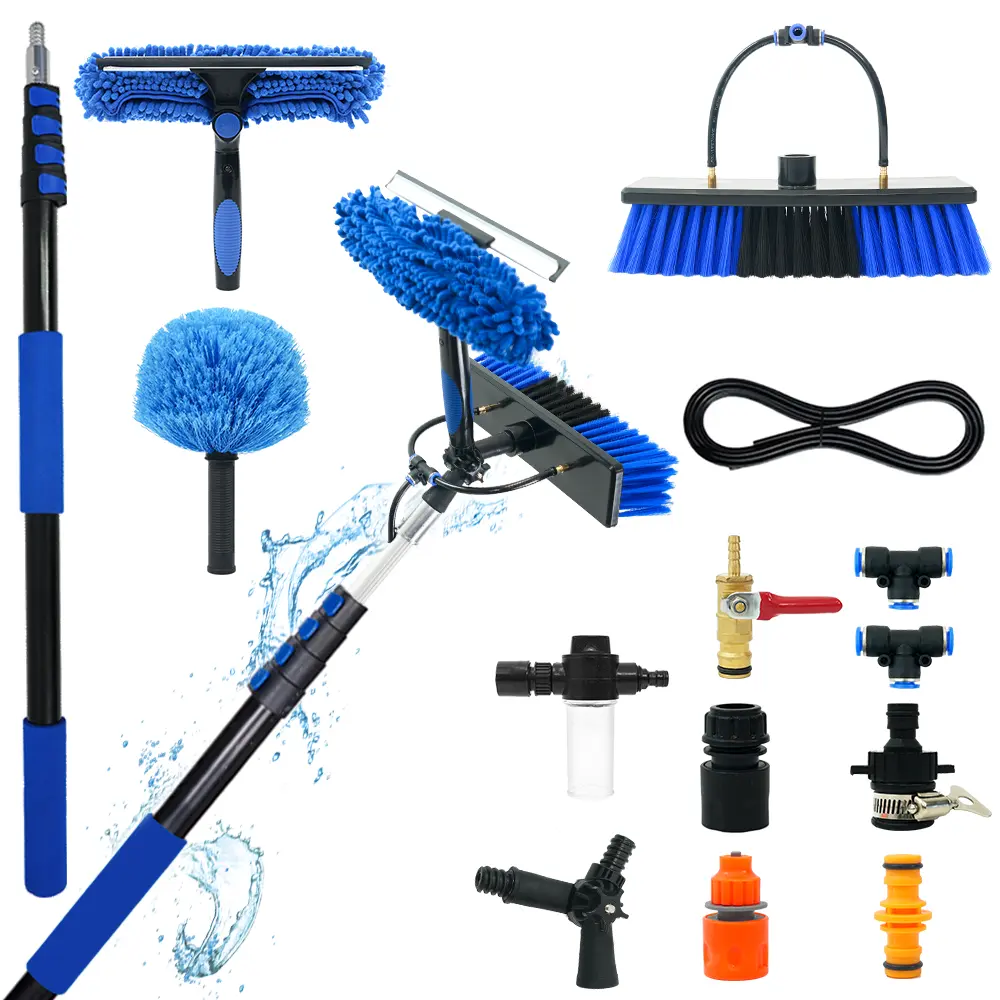
Before choosing stock items, map the products you sell and the components that connect them. A water fed pole setup can include:
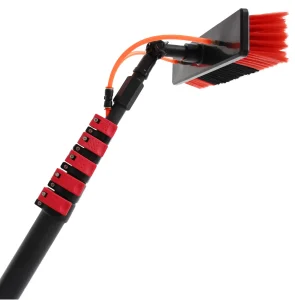
- Telescopic pole sections
- Clamps, levers, and clamp pads
- Brush heads and bristles
- Fixed or swivel brush necks
- Jets, rinse bars, and jet holders
- Pole hose and hose guides
- Quick connectors, valves, and adapters
- DI vessels, RO housings, and filter cartridges
- Pumps, pressure gauges, and electrical components
- TDS meters and related accessories
Create a product architecture sheet that shows how each item connects to the others. Record part numbers, connection types, product generations, and any required adapter. This makes it easier for sales and support teams to identify the right replacement without relying on appearance alone.
Prioritize Parts by Customer Impact
Not every component deserves the same stock priority. A useful method is to score each part against four factors:
- Failure or replacement frequency: How often do customers need it?
- Operational impact: Does its failure stop the system from working?
- Sourcing time: How long would replenishment take?
- Compatibility breadth: How many products or customers use it?
Parts that are frequently replaced, block operation, take time to replenish, or fit many configurations may deserve higher priority. Use actual sales, service tickets, warranty claims, and customer inquiries to validate assumptions.
Avoid using a universal inventory formula without considering your own customer base and supplier lead times. A part that is critical in one market may rarely be needed in another.
Build a Tiered Spare-Parts Assortment
Tier 1: Essential Service Parts
These are the components customers may need to restore normal operation or prevent a small failure from becoming a larger problem. Depending on the products you carry, this tier may include:
- Clamp assemblies or individual clamp components
- Pole sections that can be replaced separately
- Brush adapters and neck connections
- Quick connectors and shutoff valves
- Hose fittings and repair connectors
- Common seals and O-rings
Confirm which components are designed to be field-replaced and whether any tools or instructions are required.
Tier 2: Wear Items and Consumables
These parts are expected to be replaced through normal use or maintenance. Examples may include:
- Brush heads or replacement bristles
- DI resin or cartridges
- Sediment and carbon filters
- RO membranes
- Hose sections
- Jet inserts
- TDS meter batteries or accessories
Consumables create recurring demand, but their specifications must be carefully controlled. Filter dimensions, resin format, membrane requirements, and brush connections should be documented precisely.
Tier 3: Configuration and Upgrade Parts
These parts allow customers to change or expand a setup. Depending on the product range, this may include:
- Extension sections
- Alternate brush widths
- Swivel necks
- Rinse bars or different jet layouts
- Longer or wider-diameter hoses
- Additional reels, pumps, or flow-control components
- Adapters for different accessory families
Stock these items according to demonstrated demand. A broad upgrade catalog is useful only if customers can understand which options fit their existing equipment.
Compatibility Is the Core of a Good Parts Catalog
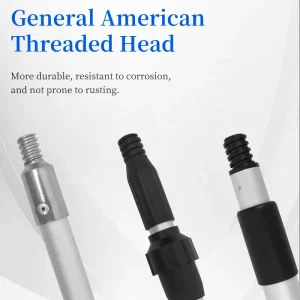
Many returns occur because a part looks similar to the required component but has a different thread, diameter, profile, or generation. Compatibility information should be explicit.
For every spare part, record:
- Exact part number and product name
- Compatible pole or system models
- Connection type and dimensions where verified
- Required adapters
- Compatible production generations
- Installation requirements
- Whether the part is interchangeable or model-specific
- Clear product photos from useful angles
Do not rely only on a broad description such as “fits most poles.” If compatibility has not been verified, state that customers should confirm the model or contact support before ordering.
Use Product Codes That Work Across Sales and Service
Consistent identification reduces mistakes between quotations, purchase orders, packing lists, and after-sales conversations.
A part-number system should be:
- Unique
- Easy for staff to search
- Stable across catalog updates where possible
- Connected to the compatible product family
- Used consistently in ecommerce, ERP, and support records
If a component changes materially, document the revision and whether old and new versions can be used together. Avoid reusing a part code for a different specification.
Set Stock Levels From Demand and Replenishment Risk
Spare-parts inventory should reflect both demand and the consequences of being out of stock.
For each SKU, track:
- Monthly sales and service usage
- Open customer requests
- Supplier replenishment time
- Minimum order quantities
- Seasonality
- Warranty replacement demand
- Part value and storage requirements
- Whether a substitute is approved
Keep deeper stock for commonly used components with long replenishment times or high operational impact. Use lower or special-order stock for infrequent upgrades and model-specific parts.
Review stock levels after product launches, major promotions, and supplier changes. A sales increase in a pole model may create a corresponding increase in demand for its brush, clamps, hose, and fittings.
Distinguish Warranty Parts From Paid Replacements
Clear warranty procedures protect both the customer and the distributor. Staff should be able to determine whether a request is:
- A warranty claim
- Normal wear and replacement
- Accidental damage
- A compatibility or installation issue
- A missing item from an order
- A product defect requiring supplier review
Define what evidence is required, such as order details, product code, photos, batch information, or a description of use. Keep the process proportionate and consistent with the actual warranty terms.
Do not promise free replacements, fixed coverage periods, or claim outcomes unless those terms are confirmed for the product being sold.
Make Reordering Simple for B2B Customers
Professional buyers often need to order parts repeatedly across multiple sites or vehicles. Make the reorder process easy by providing:
- A downloadable parts list
- Product codes on labels and invoices
- Compatibility charts
- Searchable replacement-part pages
- Bulk ordering options where available
- A way to identify older models
- Clear contact details for uncertain fitment
For wholesale accounts, consider keeping a customer-specific record of the equipment configuration they purchased. This can reduce ordering errors and speed up support.
Include Parts in Private-Label Planning
Private-label buyers should plan spare parts before the first shipment, not after customers begin asking for them.
Discuss with the supplier:
- Which components are replaceable
- Which parts can be supplied separately
- How parts are identified and packaged
- Whether private-label branding applies to parts or packaging
- How product revisions will be communicated
- Whether compatibility will be maintained across batches
- What documentation can be supplied for service teams
Ask for a recommended spare-parts list based on the product configuration, then validate it against your intended market. Do not assume that a standard kit includes service components or that parts are available indefinitely.
Avoid These Common Spare-Parts Mistakes
- Stocking parts before confirming their compatibility
- Using photos as the only way to identify a component
- Treating visually similar fittings as interchangeable
- Failing to map parts to product generations
- Ordering consumables without verifying dimensions and specifications
- Offering replacement pole sections without confirming the correct model
- Not separating warranty replacements from normal sales
- Letting sales and service teams use different product codes
- Over-stocking rare upgrades while essential parts are unavailable
- Making unsupported claims about warranty or long-term availability
A Spare-Parts Program Checklist
Before launching a spare-parts catalog, confirm that you have:
- A complete map of poles, brushes, hoses, filtration systems, and connections
- Verified part numbers and compatibility details
- Product-generation and revision records
- Clear photographs and descriptions
- A tiered stock strategy
- Demand and replenishment data
- Warranty and paid-replacement procedures
- Reorder instructions for wholesale customers
- Private-label packaging and identification requirements
- Supplier confirmation of part availability and ordering terms
Frequently Asked Questions
Which water fed pole spare parts should a distributor stock first?
Start with compatible components that have higher customer impact or repeat demand, such as commonly used brushes, connectors, hose fittings, clamps, and replaceable sections. Confirm the specific parts for your product range before setting quantities.
How can I check whether a replacement part fits a pole?
Use the exact product model, part number, connection type, and production generation. If fitment is uncertain, verify it with the supplier before ordering rather than relying on appearance.
Should distributors stock replacement pole sections?
Where the pole is designed for section replacement and the correct section can be identified, stocking selected sections can help professional users repair equipment instead of replacing the full pole. Confirm interchangeability and support terms first.
How should I estimate spare-parts stock levels?
Use sales history, service cases, warranty demand, supplier replenishment time, minimum order quantities, and the operational effect of a stockout. Revisit the estimate as the installed customer base grows.
What should private-label buyers ask about spare parts?
Ask which parts are replaceable, how they are coded, what packaging and documentation are available, how compatibility is maintained across revisions, and what supply terms apply. Get these details in writing before launch.
Support the Full Life of the Product
A dependable spare-parts program helps customers keep water fed pole equipment in service and gives distributors a practical way to support the products they sell. The foundation is accurate compatibility data, consistent product codes, sensible stock priorities, and clear communication about what is available.
If you are planning a wholesale or private-label water fed pole range, Cleafou can discuss product configurations, accessory compatibility, and spare-parts planning based on your target market. Visit cleafou.com or contact sales@cleafou.com to request product information or discuss a B2B project.