For distributors, importers, and private-label buyers, water fed pole quality control should begin before products leave the factory. A documented pre-shipment inspection can help identify specification mismatches, assembly issues, accessory errors, and packaging damage while there is still time to resolve them.
The inspection does not need to be complicated. It should be based on an approved specification, a representative sample, clear acceptance criteria, and checks that reflect how the equipment will be used. This guide from Cleafou explains how B2B buyers can create a practical inspection plan for water fed poles and related equipment.
Why Pre-Shipment Quality Control Matters
A shipment can contain the correct product category but still fail to meet the buyer’s requirements. Differences in pole length, clamp behavior, brush connections, hose fittings, labels, or packaging can cause field problems and returns.
A consistent inspection process helps buyers:
- Confirm that production matches the approved sample and purchase specification
- Detect missing or incorrect components before shipment
- Reduce damage and compatibility complaints
- Keep private-label presentation consistent
- Record objective evidence when issues need correction
- Improve communication between buyer, supplier, and inspection provider
Inspection cannot guarantee that no issue will occur after delivery. It gives both parties a shared reference and a defined process for identifying problems.
Start With an Approved Product Specification
Inspectors need to know what they are checking against. A purchase order should point to a controlled specification or configuration sheet rather than relying on a product name alone.
For a water fed pole, document the relevant attributes, such as:
- Product code and revision
- Number and sequence of pole sections
- Material description as agreed
- Extended length and collapsed length, with measurement method
- Weight and configuration included in the measurement
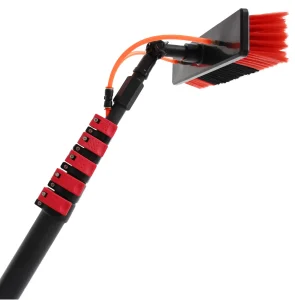
- Clamp type and placement
- Surface finish and color where applicable
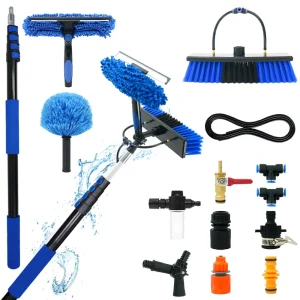
- Brush type, width, and connection
- Hose type, length, and fittings
- Included adapters and accessories
- Packaging, labels, and user documentation
Not every buyer needs to specify every attribute. Include the details that affect performance, compatibility, saleability, safety, and customer expectations. Avoid adding unverified numerical tolerances; agree on them with the supplier before production.
Approve a Reference Sample Before Mass Production
An approved sample provides a physical reference for appearance, assembly, fit, and handling. Keep a record of the sample’s product code, revision, date, configuration, and any agreed changes.
Before approval, examine the complete setup rather than only the pole tube. Fit the brush, neck, hose, connectors, and other accessories that will be sold together. Check whether the components assemble correctly and whether the configuration matches the intended customer application.
If the supplier makes changes after sample approval, request a description of the change and determine whether a revised sample or written approval is needed. A sample should not silently be treated as approval for later design revisions.
Define the Inspection Scope and Sampling Plan
The inspection plan should say what will be checked, how many units will be examined, and what happens if defects are found.
Agree on:
- Shipment quantity and product variants
- Number of cartons and units selected for inspection
- Whether samples are selected randomly
- Which checks apply to every unit and which apply to sampled units
- Defect categories and acceptance criteria
- Required photos, measurements, or test records
- How nonconforming units will be isolated and corrected
- Whether reinspection is required after corrective action
Sampling plans can reduce inspection time, but the correct sample size depends on order size, product risk, defect history, and the buyer’s requirements. Do not describe a sample inspection as proof that every unit is defect-free.
For first orders, new configurations, or products with significant changes, buyers may choose a broader inspection scope than for stable repeat orders.
Check Product Identity and Configuration
Before testing function, verify that the inspected units are the products ordered.
Check:
- Product codes and labels
- Pole length and section count
- Brush and accessory configuration
- Hose and connector type
- Color and finish where specified
- Quantity per carton and total carton count
- User instructions and language requirements
- Private-label artwork and spelling
This basic check can catch configuration errors before more detailed inspection begins.
Inspect Pole Sections and Surface Condition
Examine pole sections for visible defects that could affect fit, handling, appearance, or use. Depending on the agreed specification, inspect for:
- Dents, cracks, splitting, or severe scratches
- Surface defects or finish inconsistencies
- Deformation or out-of-round ends
- Contamination inside a section
- Sharp edges or exposed material
- Incorrect or inconsistent section markings
- Fit between adjoining sections
Visual inspection should use agreed lighting and distance where appearance is subjective. If the buyer has specific limits for cosmetic defects, write them down before production instead of deciding after the goods are packed.
Test Extension, Collapse, and Clamp Operation
Clamps and telescoping sections are frequently handled, so their operation should be part of the inspection.
On selected units:
- Extend and collapse each section through its normal travel.
- Check for binding, uneven movement, or unexpected looseness.
- Lock each clamp using the normal operating method.
- Apply a controlled check for section slippage.
- Check for excessive rotation under a representative brush load.
- Confirm that clamps can be adjusted as described in the instructions.
Use a repeatable method and record the result. A casual hand check may reveal an obvious issue but may not provide a useful acceptance standard across different inspectors.
Do not apply loads beyond the product’s intended use or invent a test limit that has not been approved by the manufacturer and buyer.
Confirm Brush and Accessory Fit
A pole may pass a basic inspection while the supplied brush or adapter is incompatible. Test the actual combination being purchased.
Check that:
- The brush attaches securely to the neck or adapter
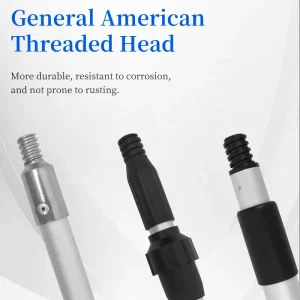
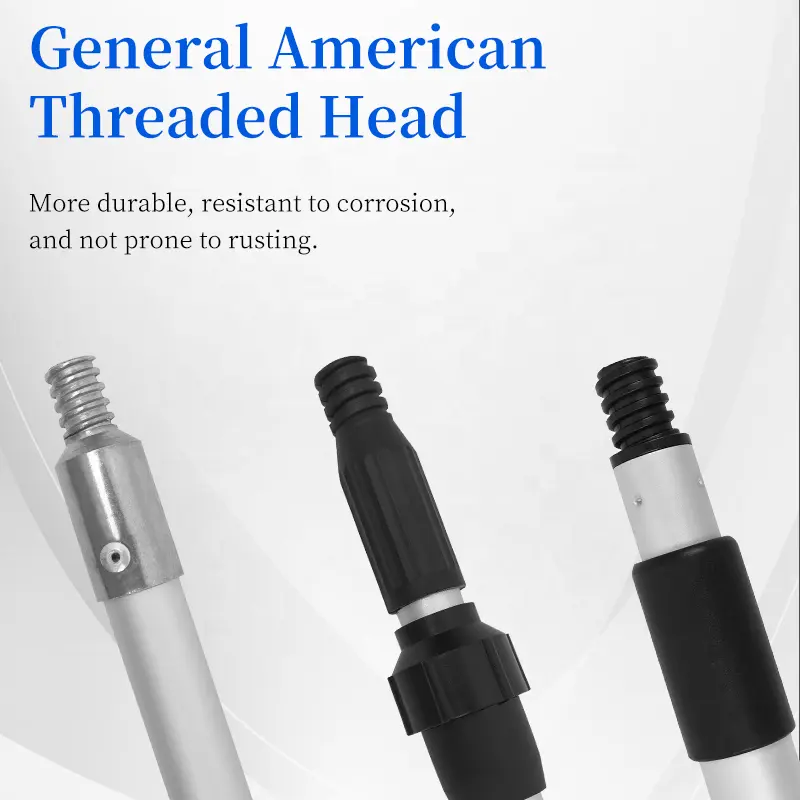
- Threads, pins, or quick connections engage correctly
- The brush sits at the intended angle
- The swivel or adjustable joint holds its selected position
- Jets or rinse components are installed in the agreed arrangement
- Hose connections fit without cross-threading or excessive force
- Any included spare jets or fittings match the stated configuration
Where the product is intended to connect to other equipment, list the compatible models or connection dimensions in the specification. Avoid relying on “universal fit” unless compatibility has been verified for the intended products.
Run a Functional Water-Flow Check
For pole kits that include hose and brush water delivery, test a representative complete assembly with water.
The check can confirm:
- Water passes through the intended route
- Connections remain secure during normal operation
- There are no visible leaks at fittings or hose joints
- Jets or rinse components produce the agreed pattern
- The hose is routed correctly and does not obstruct pole operation
- Shutoff valves, if included, open and close as intended
Water flow depends on supply pressure, hose length, fittings, and test conditions. Record those conditions if flow performance is part of acceptance. A result without test context can be misleading.
Verify Labels, Manuals, and Private-Label Details
Branding and documentation are part of the product configuration, especially for private-label programs.
Verify:
- Logo position, color, and orientation
- Product name and model number
- Barcode or carton label information
- Warning and care instructions
- Manual language and revision
- Contact or warranty details, if included
- Consistency between the carton, product, and paperwork
Use approved artwork files and a documented proof. Check spelling and product identifiers carefully; small labeling errors can affect inventory, customer support, and retail presentation.
Inspect Packaging and Shipment Readiness
Long pole sections can be vulnerable to bending, crushing, abrasion, and impact during transport. Inspect both the packaging design and packed goods.
Confirm:
- Pole sections are restrained and protected at the ends
- Brushes and fittings cannot strike or scratch the pole
- Cartons are closed and labeled as specified
- Carton dimensions and pack quantity match the shipping plan
- Pallet arrangement protects long products from bending
- Moisture protection is used where required
- Shipping marks and handling instructions are present if agreed
Packaging should be evaluated for the actual transport route. A carton suitable for palletized freight may not protect an individual parcel through last-mile delivery.
Classify Defects Before Inspection Begins
Agree on defect categories so that the inspection outcome is consistent. A typical framework may include:
- Critical: A condition that creates a serious safety or regulatory concern, based on the buyer’s requirements.
- Major: A defect that prevents normal function, makes the product incompatible, or materially changes the agreed specification.
- Minor: A limited cosmetic or documentation issue that does not prevent intended operation, but may still require correction or tracking.
The buyer and supplier should define examples for the specific product. A defect should not be downgraded or upgraded only after the inspection result is known.
Document Results and Corrective Actions
An inspection report should make the outcome easy to understand and act on. Include:
- Purchase order and product identifiers
- Inspection date and location
- Units and cartons checked
- Inspection method and agreed sample plan
- Measurements and functional results
- Defect descriptions and classifications
- Clear photos linked to the findings
- Quantity affected or estimated scope
- Required corrective action and due date
- Reinspection or disposition decision
When a problem is found, agree whether the affected units will be repaired, replaced, sorted, relabeled, repacked, or held for further review. Record the decision in writing before shipment release.
Common Pre-Shipment Inspection Mistakes
- Inspecting against an outdated or incomplete specification
- Approving a sample without recording its revision
- Checking the pole but not the included brush and fittings
- Measuring length without defining the measurement method
- Testing clamps inconsistently between units
- Treating a small sample as proof that the entire shipment is perfect
- Ignoring labels, manuals, and carton contents
- Using vague defect terms without photos or examples
- Setting acceptance criteria after seeing the inspection result
- Releasing goods before corrective actions are verified
A Practical Pre-Shipment Checklist
Before authorizing shipment, confirm that:
- The purchase order matches the approved specification
- The reference sample and revision are identified
- Product codes and quantities are correct
- Pole sections and surfaces meet agreed requirements
- Clamps extend, lock, and hold as intended
- Brush, adapter, hose, and connectors fit together
- Water-flow components pass the agreed functional check
- Labels, manuals, and private-label artwork are correct
- Packaging protects the product for the intended shipping route
- Inspection records and corrective actions are complete
- The shipment release decision is documented
Frequently Asked Questions
When should a B2B buyer arrange a pre-shipment inspection?
Arrange it after production is sufficiently complete for inspection and before the shipment is released. Timing should allow room for sorting, correction, and reinspection if needed.
Does a pre-shipment inspection guarantee defect-free products?
No. Inspection checks a defined scope and sample under agreed conditions. It reduces uncertainty and creates evidence, but it cannot guarantee that every unit will be free of defects.
What should be checked on a carbon fiber water fed pole?
Follow the agreed specification. Typical checks include section identity, length, visible condition, fit, clamp operation, extension and collapse, rotation under a representative load, accessory fit, and packaging protection.
Should the buyer or supplier define acceptance criteria?
Both should agree on them before production. The buyer communicates market and product requirements, while the supplier confirms what can be produced and how it will be checked.
Is a sample inspection enough for every repeat order?
Not necessarily. Inspection scope should reflect product risk, order size, change history, and past quality performance. New designs or major revisions may justify more extensive checks.
Make Quality Requirements Part of Procurement
A useful pre-shipment inspection starts well before the inspector arrives. Buyers need a clear specification, an approved sample, compatible accessories, defined defect criteria, and a documented response process.
By applying the same checks to the product, accessories, labels, and packaging, distributors and importers can make release decisions with better evidence and support customers more consistently
If you are sourcing water fed poles, brushes, pure-water equipment, or private-label configurations, Cleafou can discuss your product requirements and inspection priorities. Visit cleafou.com or contact sales@cleafou.com to request product information or begin a B2B inquiry.