Building a water fed pole product range is a product-planning decision, not simply a matter of choosing several pole lengths and listing them in a catalog. Distributors need a range that is easy to explain, covers distinct customer needs, includes compatible accessories, and can be supported with replacement parts.
A focused range can serve professional window cleaners without creating unnecessary inventory complexity. This guide explains how distributors and importers can organize water fed pole products around customer applications, system compatibility, accessory needs, and after-sales support.
Start With Customer Segments, Not a Product List
Before selecting products, identify the buyers you serve. Common customer groups include:
- Individual window cleaners building a mobile setup
- Small residential cleaning teams
- Commercial cleaning contractors
- Facility maintenance departments
- Distributors serving multiple markets
- Private-label buyers developing a branded equipment line
These customers do not all need the same pole, brush, filtration system, or service parts. A residential operator may prioritize easy handling and transport. A commercial contractor may prioritize reach, repeatability, and compatibility across a fleet. A distributor may focus on a broader accessory ecosystem and manageable inventory.
Interview existing customers and review sales or support questions. Look for recurring needs such as high-window access, hose replacement, brush options, compact storage, or a pure-water system for frequent use. These patterns should shape the range.
Create a Clear Core Range
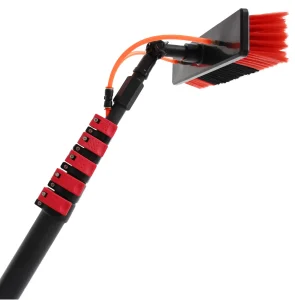
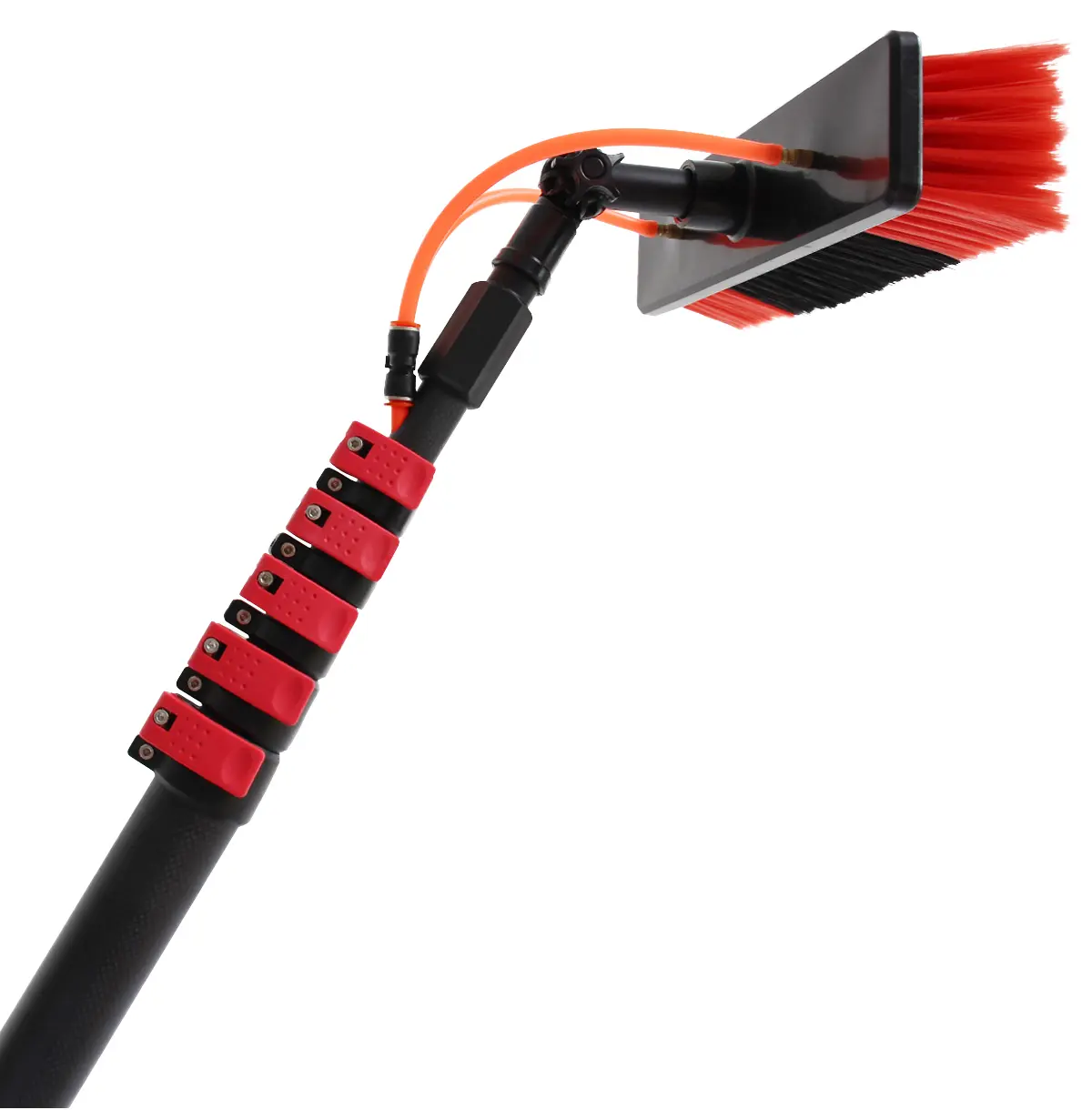
A useful product range normally begins with a small number of clearly differentiated options. Each product should solve a distinct problem rather than duplicate another item with only a minor cosmetic change.
One possible structure is:
Everyday Pole
Designed for routine residential or light commercial work where moderate reach, manageable weight, and straightforward setup are priorities.
Extended-Reach Pole
Designed for customers who regularly encounter taller buildings, raised foundations, setbacks, or other access challenges. Buyers should understand the practical working reach, not just the nominal section length.
Fleet or Specialist Configuration
Designed for businesses with specific use cases, such as multiple operators, longer working sessions, or a need to standardize equipment across vehicles. This configuration may require a separate assessment of rigidity, water delivery, accessories, and service support.
The exact lengths and construction should be determined from Cleafou’s verified product specifications and customer demand. Avoid presenting a configuration as suitable for a height or use case unless that performance has been confirmed.
Build Each Offer Around a Complete Use Case
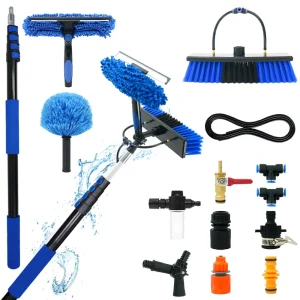
Customers often struggle to compare poles when the listing omits the brush, hose, adapter, or intended filtration setup. Distributors can reduce confusion by offering complete configurations alongside individual components.
A product page or quote should clearly state:
- Pole material and section configuration
- Nominal length and collapsed transport length
- Brush type and width
- Hose inclusion, length, and connection type
- Adapter or swivel-neck inclusion
- Compatibility with filtration equipment
- Whether the setup is intended for direct feed or tank-and-pump use
- Included accessories and optional upgrades
- Available service parts
If a specification is unknown or varies by configuration, confirm it before publication. A transparent product description prevents mismatched expectations and reduces avoidable returns.
Offer Accessories That Solve Specific Problems
Accessories can make a product range more useful and create natural opportunities for repeat purchases. They should be selected according to customer tasks, not added only to increase the number of SKUs.
Brushes
Different brush designs suit different levels of agitation, frame cleaning, and maintenance work. A distributor may offer a general-purpose brush as the standard option and additional brush types for specialized requirements.
Make the differences clear in plain language. Explain bristle material, stiffness, width, water distribution, and the intended cleaning application using verified product details.
Brush Necks and Adapters
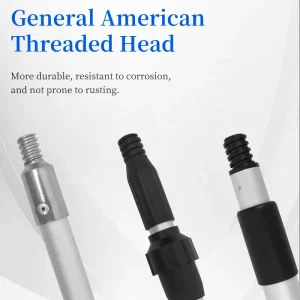
Fixed and adjustable necks can affect how a user positions the brush around frames, rooflines, and obstacles. Confirm the connection type and compatibility before bundling these items.
Hose and Connectors
Hose diameter, length, flexibility, and fitting compatibility affect water delivery and ease of movement. Offer common replacement components and make it clear which hose works with which pole or system.
Jets and Rinse Components
Pencil jets, fan jets, and rinse bars provide different water patterns. A buyer should be able to understand what is included, what can be interchanged, and whether the system requires a particular flow level.
Repair Parts
Clamps, section components, adapters, seals, and connectors can be important for keeping professional equipment in service. Identify parts with consistent product codes and compatibility notes.
Treat Filtration as a Separate but Connected Product Category
Water fed poles and pure-water systems are closely related, but they address different buying questions. The pole delivers the brush to the glass; the filtration system prepares the water.
Distributors may organize filtration products into clearly explained options such as:
- Compact DI systems for appropriate water quality and usage levels
- RO/DI systems for customers who need higher-volume production or reduced DI resin consumption
- Pumps, tanks, reels, and flow-control accessories where required by the workflow
- Replacement resin, filters, membranes, meters, and fittings
Do not imply that one filtration configuration is right for every location. Incoming TDS, daily water demand, feed pressure, wastewater handling, storage, and maintenance capacity all affect selection.
Cross-link filtration products with poles and brushes so customers can understand how the system works together. At the same time, state any compatibility requirements clearly.
Use Bundles to Make Buying Easier
Bundles can help customers purchase a working setup without researching every component individually. A good bundle is organized around a use case and has a complete, verified bill of materials.
For example, a distributor could consider:
- A pole-and-brush starter configuration
- A residential maintenance kit with pole, brush, hose, and selected fittings
- A pure-water package with filtration, pole, hose, and accessories
- A fleet replenishment kit with common replacement parts
Before offering a bundle, confirm that:
- All fittings connect correctly
- The hose supports the intended flow and length
- The brush matches the pole and neck
- The filtration unit suits the stated water and workflow
- The included accessories are identified by part number
- Customers can reorder consumables and replacements
Avoid describing a bundle as “complete” if the customer still needs a pump, tank, connector, or other essential component that is not included.
Make Compatibility Easy to Understand
Compatibility is one of the most common sources of confusion in equipment catalogs. A distributor should maintain a simple matrix that maps poles, brushes, necks, hoses, connectors, and filtration products.
For each item, record:
- Product code
- Connection type
- Compatible product families
- Required adapters
- Whether the part is interchangeable across product generations
- Replacement or upgrade options
Publish compatibility information on product pages and include it in sales documentation. If two components appear similar but are not interchangeable, say so clearly.
Plan Inventory Around Core Items and Service Parts
Too many variations can tie up cash and create slow-moving inventory. Too few options can leave customers unable to complete or repair their setup.
Consider classifying inventory into:
- Core products: poles, standard brushes, and popular filtration configurations.
- Attach-rate accessories: hoses, adapters, necks, and rinse components commonly purchased with a system.
- Consumables: resin and replacement filters for supported filtration units.
- Service parts: clamps, seals, connectors, and replaceable sections.
- Special-order items: less common lengths, custom bundles, and specialized configurations.
Use sales history, customer requests, lead times, and minimum order requirements to determine stock levels. Review the range regularly and remove items that do not serve a clear customer segment.
Support the Product After the Sale
Professional buyers consider downtime and repairability when choosing equipment. After-sales support can differentiate a distributor even when several sellers offer similar categories of products.
Useful support materials include:
- Setup and maintenance instructions
- Parts diagrams
- Compatibility charts
- Troubleshooting guides
- Clear warranty and claims procedures
- Replacement-part ordering information
- Product identification labels
Do not promise service coverage or warranty terms that have not been confirmed with the manufacturer. Make sure sales staff know how to identify a part and where to route technical questions.
Measure Whether the Range Is Working
After launch, review more than total revenue. Useful measures include:
- Sales by customer segment and configuration
- Accessory attachment rate
- Repeat consumable purchases
- Return reasons
- Warranty and repair frequency
- Stockouts on key parts
- Questions customers ask before purchase
- Quote-to-order conversion
- Revenue from replacement parts
These signals show whether the range is understandable and complete. If many buyers ask the same compatibility question, improve product pages or bundle descriptions. If a pole sells but compatible brushes do not, review the accessory presentation and included configuration.
A Distributor’s Product-Range Checklist
Before adding a water fed pole range to your catalog, confirm that you have:
- Defined target customer segments
- A clear role for each pole configuration
- Verified material, length, weight, and compatibility information
- A practical brush and accessory selection
- A documented compatibility matrix
- Bundle contents and part numbers
- A filtration strategy matched to customer workflows
- Consumables and repair parts identified
- Packaging and shipping requirements reviewed
- Supplier quality and sample-approval procedures
- Confirmed warranty, MOQ, and lead-time information
- Sales and after-sales support materials
Frequently Asked Questions
How many water fed pole models should a distributor launch with?
There is no universal number. Begin with configurations that serve distinct customer needs and can be supported with accessories and replacement parts. Add options when customer demand justifies them.
Should a distributor sell complete kits or individual components?
Offering both can serve different buyers. Complete kits simplify selection, while individual poles, brushes, hoses, fittings, and service parts support experienced users and replacement purchases.
Should filtration systems be bundled with poles?
Bundles can be convenient when the filtration system, water source, flow requirements, and operating workflow are compatible. State exactly what is included and identify any required pump, tank, hose, or fitting separately.
Which accessories should be stocked first?
Start with components that support the core products and appear frequently in customer requests, such as compatible brushes, hoses, connectors, adapters, and essential service parts. Use sales data to expand the assortment.
How can private-label buyers reduce product-range complexity?
Use a focused core range, standardize compatible connections where practical, and reserve customization for changes that matter to the target market. Confirm the effect of customization on MOQ, sampling, packaging, and lead time with the supplier.
Build a Product Range Customers Can Grow With
A strong water fed pole range gives buyers a clear path from an initial setup to replacement parts, upgraded accessories, and higher-capacity systems. It is organized around real work, supported by understandable specifications, and backed by reliable compatibility information.
For distributors and importers, the goal is to make product choice easier while keeping inventory and support manageable. Start with customer needs, define each configuration clearly, and expand the range based on sales and service evidence.
If you are planning a wholesale, distribution, or private-label water fed pole range, Cleafou can discuss product categories, configuration requirements, and accessory planning for your target market. Visit cleafou.com or contact sales@cleafou.com to request product information or begin a B2B inquiry.