Skylights bring natural light into a room, but their position above vaulted ceilings, stairwells, and high living areas can make them difficult to clean.
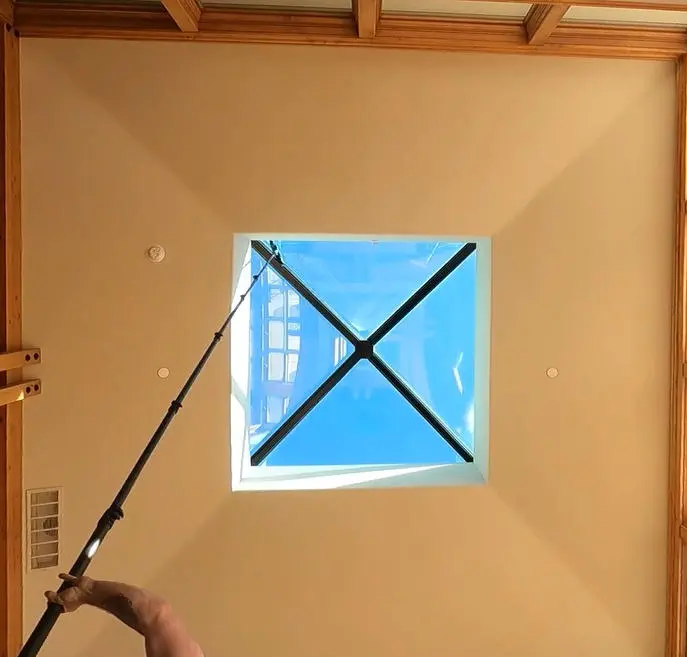
If the interior glass is covered mainly with dust, light haze, or minor marks, you can often clean it from the ground using a telescopic pole, microfiber washer, and low-angle squeegee.
However, “without a ladder” does not mean every skylight can be cleaned safely with a pole. The correct method depends on the height, glass angle, type of contamination, surrounding walls, and your ability to control the tool.
This guide explains how to clean the interior side of a skylight from the floor and when to stop and call a professional.
Which Skylights Can Be Cleaned With a Telescopic Pole?
Telescopic pole cleaning works best when:
- The skylight is above an indoor living space.
- The glass has dust, haze, fingerprints, or light surface dirt.
- You can control the pole while standing on a flat, stable floor.
- The cleaning head can meet the glass at a suitable angle.
- There are no exposed wires, ceiling fans, or fragile light fixtures in the working area.
- Floors, furniture, and nearby walls can be protected from drips.
A standard extension-pole method may not be suitable when:
- The glass has paint, cement, adhesive, or construction debris.
- The contamination requires a scraper, chemical treatment, or heavy pressure.
- The glass, frame, or seals appear damaged.
- The pole bends excessively or becomes difficult to control at full length.
- You must work near electrical hazards, stairs, balconies, or unstable flooring.
- The exterior surface can only be reached by accessing the roof.
These situations require a proper risk assessment and may need professional access equipment.
Do not stand on furniture, improvise a platform, or lean from a roof edge to reach the glass.
Tools for Cleaning a Skylight From the Ground
The right tools reduce dripping, streaks, and repeated work.
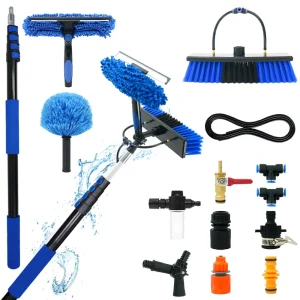
Essential equipment includes:
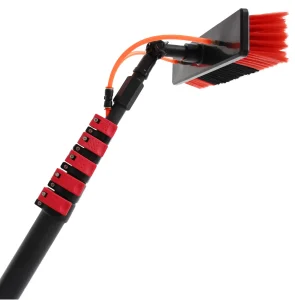
- A lightweight telescopic window-cleaning pole
- A secure pole adapter
- A 10- to 14-inch microfiber window washer
- An adjustable-angle squeegee
- Clean, undamaged squeegee rubber
- Microfiber detailing cloths
- A small amount of glass-cleaning solution or diluted neutral detergent
- A bucket or spray bottle
- Absorbent towels or waterproof floor coverings
A lightweight carbon-fiber pole is easier to control at greater height, but carbon fiber can conduct electricity and must be kept away from wires and powered fixtures.
An aluminum pole can also work, although it becomes heavier and more tiring when extended.
Whatever material you choose, inspect the clamps, pole sections, adapter, and tool connection before use.
Protect the Floor, Walls, and Furniture First
Dirty solution from an overhead skylight can drip onto paintwork, carpets, and furniture.
If the skylight has not been cleaned for a long time, the runoff may carry dark dust that leaves visible marks on light-colored flooring.
Before you begin:
- Move furniture and decorative items away from the area below the skylight.
- Cover the floor with absorbent towels or a waterproof sheet.
- Protect carpets and any furniture that cannot be moved.
- Check whether the surrounding wall paint is sensitive to water.
- Plan the pole’s movement so it cannot strike lights, fans, or wall corners.
- Wear slip-resistant footwear and clear the work area of trip hazards.
Use as little cleaning solution as practical. The washer should be damp enough to clean and lubricate the squeegee, but it should not continuously drip.
The more water you apply overhead, the more cleanup will be required below.
Step 1: Inspect the Skylight and Identify the Dirt
Look at the glass from several angles before extending the pole.
Ordinary dust and light haze can normally be removed with a microfiber washer.
If you see grit, hardened particles, paint, or construction residue, do not scrub it back and forth with a standard washer. Trapped particles can scratch the glass.
Also inspect for:
- Cracks or chips in the glass
- Loose frames or damaged seals
- Existing water leaks
- Film, tint, or special glass coatings
- Peeling or water-damaged paint around the opening
If you cannot identify the contamination or glass type, test an inconspicuous area or ask a qualified professional to assess it.
Step 2: Apply a Small Amount of Cleaning Solution
Attach the microfiber washer securely to the pole and dampen it with a small amount of cleaning solution. Do not fully saturate it.
Starting at the upper section of the skylight, clean the glass with overlapping straight strokes.
Give the edges and corners extra attention, but do not apply heavy pressure that you cannot control from the ground.
If the solution begins to dry before you can squeegee it, return the damp washer to the glass and re-wet the affected area.
Dragging squeegee rubber across dry glass can cause skipping, noise, and streaks.
Step 3: Set the Squeegee to a Low Angle
High, sloped, or nearly horizontal skylights can be difficult to close out with the larger tool angle commonly used on vertical windows.
Setting an adjustable squeegee to approximately 0 to 10 degrees often helps the rubber sit evenly on the glass and finish cleanly at the lower edge.
This range is a starting point, not a universal setting. The correct angle depends on:
- The slope of the skylight
- Your horizontal distance from the glass
- The length of the extension pole
- The design of the squeegee
- The depth of the frame
If only part of the rubber contacts the glass, change your standing position or adjust the tool head.
Do not try to solve poor contact by forcing the pole upward.
Step 4: Use Straight, Overlapping Pulls
Straight pulls are usually easier to control on an overhead skylight than a complex fanning pattern.
Use this process:
- Place the squeegee at the upper edge of the wet glass.
- Confirm that the entire rubber blade is in contact.
- Pull the tool down in one smooth motion.
- Overlap the previous path slightly with the next pull.
- Clean the rubber between passes if it collects dirt.
- Use slightly firmer control for the final closeout, then lift away cleanly.
If the window shape and your level of control allow it, you can use gentle fanning strokes.
However, there is no need to make the movement more complicated than necessary. Controlled, overlapping straight pulls produce a reliable finish on many interior skylights.
Step 5: Detail the Frame and Remove Wall Drips
Clean glass is only part of the job.
A small amount of cleaning solution will often reach the lower frame or the wall beneath the skylight.
Secure a clean microfiber cloth to a pole-mounted detailing pad and promptly dry:
- The bottom edge of the skylight
- Frame corners
- The surrounding wall
- Any visible runoff paths
Wall drips are easier to remove before they dry.
On delicate paint, begin by blotting the moisture instead of aggressively rubbing the surface. Use a clean cloth so you do not spread dirty water across the wall.
Step 6: Inspect the Glass From Different Angles
Natural light makes small squeegee marks easy to see.
After cleaning, view the skylight from several positions and look for:
- Vertical water lines
- Moisture along the edges
- Remaining haze
- Repeated lines caused by the blade
- Drips on the frame or wall
If a line appears in the same position after every pass, inspect the squeegee rubber for grit, damage, or a worn edge.
Adding more detergent is rarely the solution. Excessive detergent can create residue and make detailing more difficult.
How to Prevent Streaks on a Skylight
Control the Amount of Solution
Use only enough solution to loosen the dirt and allow the blade to glide.
Too much liquid creates additional runoff, while too much detergent can leave residue.
Keep the Rubber Clean and Sharp
Dust, hair, grit, cuts, and hardened rubber can create repeatable lines.
Wipe the blade regularly and replace it when it no longer sits evenly on the glass.
Do Not Let the Glass Dry Mid-Clean
Skylights can become warm in direct sunlight.
Work in smaller sections and squeegee the solution before it dries.
Overlap Each Pull
A small gap between passes leaves a wet line. Slight overlap provides a more consistent result.
Adjust the Tool Angle
An angle that is too steep may make the bottom edge difficult to close out.
Poor or uneven contact can also make the blade chatter. Make small adjustments until the full rubber edge stays on the glass.
Common Mistakes to Avoid
Avoid these common skylight-cleaning mistakes:
- Using too much water or cleaning solution
- Failing to protect carpets, walls, and furniture
- Using a pole that is too heavy or flexible at full extension
- Applying more force when the blade is not contacting the glass correctly
- Squeegeeing after the solution has dried
- Scrubbing grit or construction debris with a standard washer
- Ignoring runoff on the frame and wall
- Standing on furniture, boxes, or an unstable improvised platform
- Using a conductive pole near wiring, lights, or fans
- Applying an interior pole-cleaning method to exterior glass that requires roof access
What About the Outside of the Skylight?
This guide focuses on cleaning the interior pane from the floor.
Exterior skylight glass can collect rain residue, tree sap, bird droppings, algae, and other heavier contamination.
When the exterior can be reached from a safe ground position, a trained cleaner may use a water fed pole and purified water.
If the work requires roof access, movement near an edge, or standing on a sloped surface, appropriate access equipment, fall protection, and site-specific safety controls are required.
Do not walk onto an unfamiliar roof simply to clean a skylight.
The skylight and surrounding roofing materials must never be treated as load-bearing walking surfaces unless they have been specifically designed and confirmed for that purpose.
When Should You Hire a Professional?
Professional help is the safer option when:
- The skylight is beyond the stable working range of your pole.
- The glass has construction residue or hard-water deposits.
- The skylight is cracked, leaking, or has damaged seals.
- Electrical equipment is close to the work area.
- The exterior requires roof access.
- You would need to stand near stairs, a balcony, or an unstable floor edge.
- Cleaning may damage a specialized coating or window film.
Final Thoughts
The safest way to clean a suitable interior skylight without a ladder is to remain on a stable floor and use a lightweight telescopic pole, microfiber washer, and low-angle squeegee.
For dust and light haze, a squeegee angle of approximately 0 to 10 degrees combined with overlapping straight pulls is often easier to control than complicated fanning movements.
Protect the floor and furniture before starting, use a limited amount of cleaning solution, and promptly dry the frame and surrounding walls.
Stop if you encounter construction debris, damaged glass, electrical hazards, exterior roof access, or a height at which the pole cannot be controlled safely.
To learn more about telescopic cleaning poles, glass-cleaning tools, and related accessories, visit cleafou.com or contact Cleafou at sales@cleafou.com.